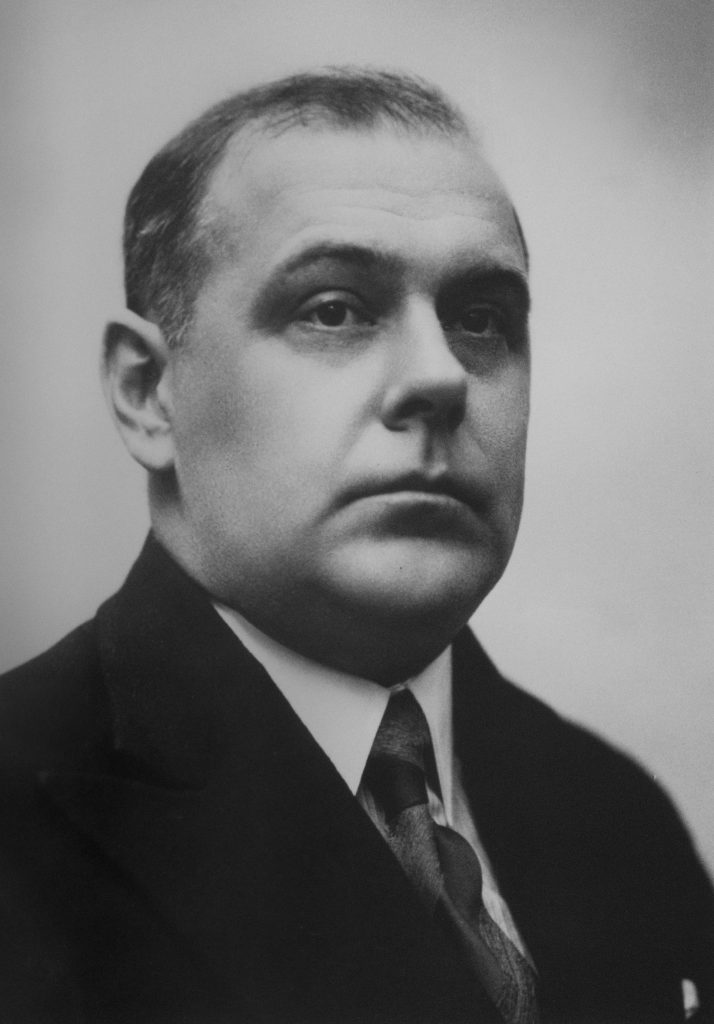
On Saturday, Otto Pukk, a member of several compositions of the Riigikogu (Parliament of Estonia) and the Speaker of the Riigivolikogu (Chamber of Deputies), and his wife Agnes Pukk, will be reburied in their native soil at Kudjape Cemetery on the island of Saaremaa.
The memorial ceremony for the reburial, which begins at 2 p.m., will be conducted by Anti Toplaan, Bishop of the Saare-Lääne Diocese of the Estonian Evangelical Lutheran Church, and Hannes Nelis, Chaplain of Saaremaa District of the Estonian Defence League. President of the Riigikogu Lauri Hussar, representative of the Pukk family Kiku Pukk Härenstam and representative of Academic Corporation Fraternitas Estica Paul Antsaar will deliver speeches at the ceremony.
After the laying of wreaths, flowers and candles, the burial site will be blessed, followed by a moment of silence and then a gun salute. Flag guards will be lined up at the gravesite; Kuressaare City Orchestra and Saaremaa United Men’s Choir will provide musical accompaniment for the ceremony.
Otto Pukk, the grandson of Otto and Agnes Pukk, recalled that due to the war and the occupation of Estonia, his grandparents’ life journey had led them from their homeland to Sweden, and their final resting place had been there for decades. “Their story is not just the story of our family – it is a part of Estonian history. My grandfather Otto Pukk was a prominent Estonian statesman and lawyer. He served as the Speaker of the Riigivolikogu, actively participated in Estonia’s underground struggle for freedom, was one of the architects of Otto Tief’s government (the last government of independent Estonia before Soviet occupation), and continued his political activities in exile. He was also an honorary alumnus of the academic corporation Fraternitas Estica and a long-time president of its alumni association,” he said.
In the history of Estonian parliamentarianism, Otto Richard Pukk (1900–1951), a native of the village of Loona on the island of Saaremaa, ranks among those statesmen whose activities spanned the most challenging years in the history of the Republic of Estonia. As a volunteer in the Estonian War of Independence, a lawyer, a journalist and a politician, his entire life was dedicated to serving the Estonian state and its democratic legal order.
In 1926, Pukk was elected to the 3rd Riigikogu, and in 1932 to the 5th Riigikogu. In the lower house of the 6th Riigikogu, the Riigivolikogu, which was elected in 1938, he first served as the second Vice-Speaker and, from October 1939, as the Speaker. In this role, he went down in history as the leader of the Republic of Estonia’s last legitimate parliament before the Soviet occupation.
Pukk consistently acted as a staunch defender of Estonia’s constitutional order. In the summer of 1940, when sham parliamentary elections were staged in Estonia under pressure from the Soviet Union and the annexation of the country began, Pukk as the Speaker of the legitimate Riigivolikogu tried to publicly challenge these events and draw attention to their illegality. He was arrested for this, but his actions became a symbolic example of resistance to the destruction of Estonia’s independence.
During the complicated times of World War II and the occupations, Pukk, together with Jüri Uluots, August Rei, Otto Tief and other state leaders, was a person who upheld the principle of the legal continuity of the Republic of Estonia. Even after fleeing to Sweden in 1944, he continued his work to ensure that the world would not forget the existence of the Republic of Estonia and that faith and hope in the restoration of independence would be kept alive. His actions helped preserve the continuity of the Republic of Estonia at a time when the country itself was under occupation.
Pukk died in 1951. His funeral service was held on the 33rd anniversary of the Republic of Estonia at the Holy Cross Chapel of the Stockholm Woodland Crematorium, and the urn with his ashes has been kept in the Högalid Church columbarium.
Photos of the memorial ceremony at the reburial of Otto and Agnes Pukk will be published on Saturday in the Riigikogu photo archive (Erik Peinar / Chancellery of the Riigikogu)