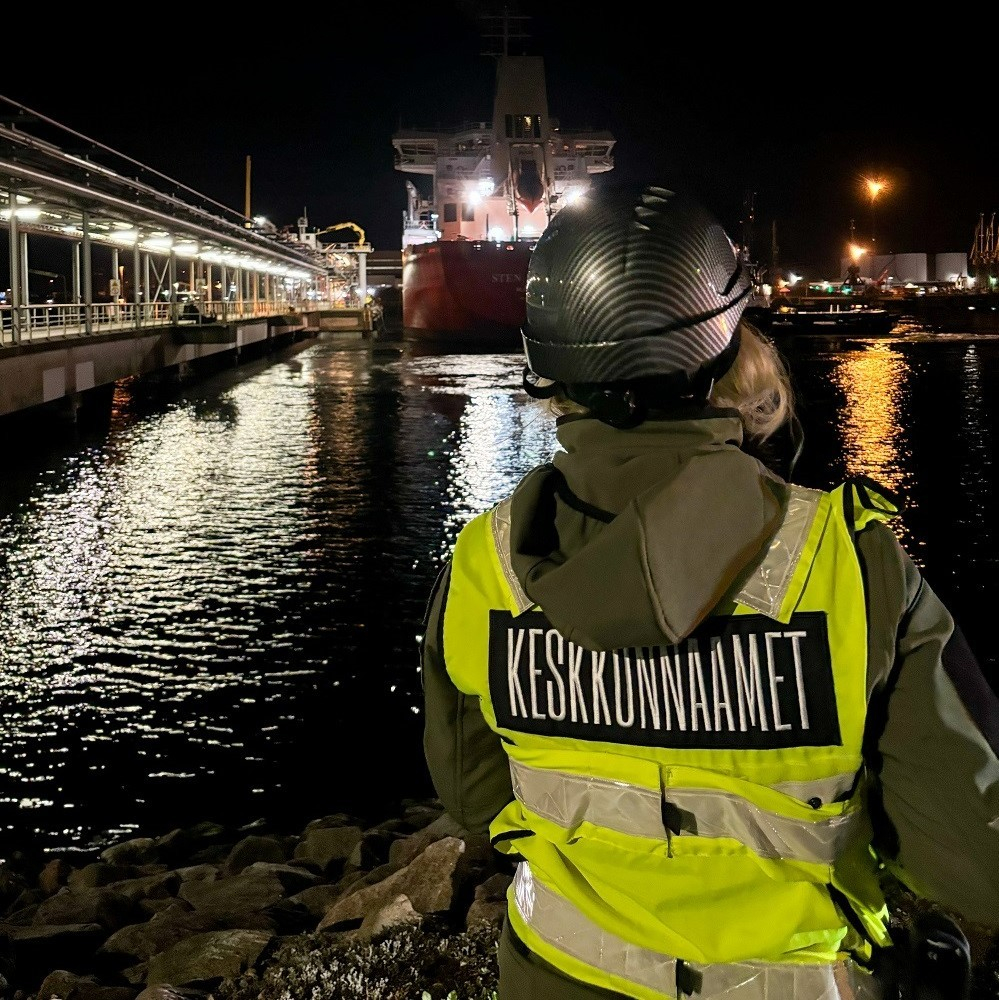
The Bill on Amendments to the Environmental Supervision Act and Other Acts (expansion of the right of the Environmental Board to apply direct coercion) (811 SE), initiated by the Government of the Republic, will grant the employees of the Environmental Board the right to use gas weapons, impact weapons (telescopic batons), and handcuffs in addition to physical force while exercising state supervision in emergency situations. With the expansion of powers, environmental inspectors will receive additional training, which includes both basic and follow-up courses.
The Bill aims to resolve the problem of inspectors lacking the tools necessary for their everyday work. Upon completing special training, they will be granted the right to use gas weapons and impact weapons, as well as handcuffs.
At present, 110 environmental inspectors work at the Environmental Board. The aim of the amendment is to ensure their safety and to provide them with sufficient tools to respond to violations causing serious damage to the environment. For example, in situations where it is necessary to stop the burning of hazardous waste, the discharge of sewage into water, or the release of hazardous substances into the soil. Inspectors must be able to respond immediately, stop the violation, and detain the offender.
Currently, the Environmental Board has the right to use firearms in emergency situations when monitoring poaching and illegal fishing. The Bill does not expand the right to use firearms; it will remain limited to state supervision exercised under the Hunting Act, Forest Act, Fishing Act, and the Aviation Act.
Gas weapons or impact weapons may only be used as an extreme measure when other means prove ineffective.
Rain Epler from the Estonian Conservative People’s Party Group and Mait Klaassen from the Reform Party Group took the floor during the debate.
The Environment Committee, as the lead committee, moved to conclude the first reading. The Estonian Conservative People’s Party Group moved to reject the Bill 811 SE. The motion was not supported. Nine members of the Riigikogu voted in favour, and 35 voted against. The first reading of the Bill was concluded.
Verbatim record of the sitting (in Estonian)
Video recording will be available on the Riigikogu YouTube channel.