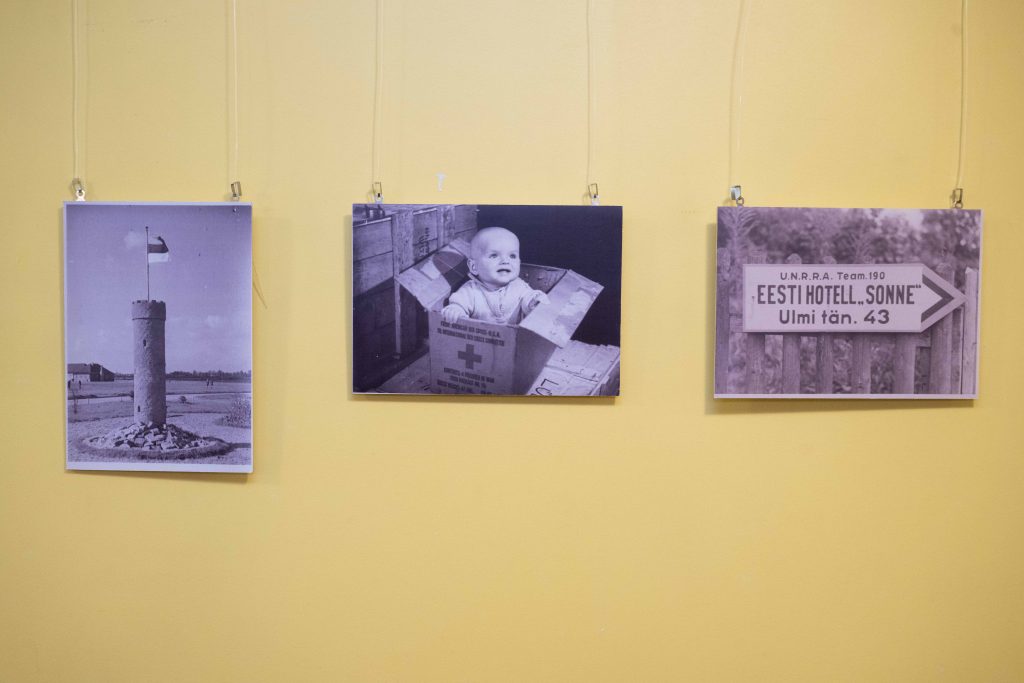
Today at 2 p.m., Member of the Riigikogu Anti Poolamets will open the photo exhibition “Estonian Refugee Camps in Germany in the Photographs of Karl Hintzer” at the Riigikogu (Parliament of Estonia), in the exhibition hall on the second floor of Toompea Castle. The exhibition commemorates the 82nd anniversary of the Great Escape, the mass flight of Estonians from the Red Army. The opening of the exhibition will be followed by a piano concert and an overview of the creative activities of Estonians in exile.
The historical photographs on display provide a glimpse into the lives of the nearly 40,000 Estonian war refugees who arrived in Germany after the mass flight of 1944. The photos depict daily life in refugee camps, the restoration of Estonian-language education and cultural life, and the efforts to preserve national identity.
Karl Nikolai Hintzer (1895–1967) was a photographer and teacher. In 1941–1944, he worked as a photographer for the newspaper Postimees. After the mass flight of 1944, he settled in Germany and soon became the most important photo chronicler of Estonian refugee camps. Hintzer visited nearly 30 camps, documenting the daily lives of Estonians, their cultural events, schools and education, national holidays, and community activities in exile.
“These photos tell not only the story of the Estonians’ flight, but also of their resilience. In the refugee camps, people did not sit idly, waiting for better times; instead, they built strongholds of the Estonian spirit: schools, choirs, and associations. Karl Hintzer’s camera lens captured the moment when the people who had lost their homeland decided that they would never lose their national identity. That is precisely why these images still speak to us today and remind us that freedom and national continuity cannot be taken for granted,” Anti Poolamets, a member of the Riigikogu’s Estonian Diaspora Support Group, said when introducing the exhibition.
The exhibition’s curator Harry Liivrand, and Iivi Zájedová, project manager at the World Estonian Council and Chair of the 1944 Mass Flight Committee, will also speak at the opening.
The opening of the exhibition will be followed by a piano concert in the Riigikogu café, where researcher of the Estonian History Museum Carolin Krajňák will play piano music by Estonian composers living abroad. Krajňák will also give a brief overview of the fates and creative activities of Estonian female musicians who fled to the West in 1944.
The event is organized by the Estonian Diaspora Support Group of the Riigikogu in cooperation with the Estonian World Council and Tammepuu Eesti Klubi. The exhibition is curated by art historian Harry Liivrand.
The photo exhibition in the exhibition hall on the second floor of Toompea Castle will be open until 22 October. The exhibition can be visited from Monday to Thursday from 10 a.m. to 4 p.m. Visitors need to present an identity document to enter Toompea Castle. Please let us know in advance if you plan to visit the exhibition by emailing [email protected] or calling (+372) 631 6300.
Photo gallery of the exhibition and its opening (photos: Erik Peinar / Chancellery of the Riigikogu)